---
description: "Facts about Landfills: It leads to methane emissions, air quality degradation, soil fertility decline, and increased landslide risks."
title: 10 Interesting Landfills Facts and Stats - Energy Theory
image: https://energytheory.com/wp-content/uploads/2024/01/facts-about-landfills.png
---
Close Menu
- [About](https://energytheory.com/about-us/)
- [EV](https://energytheory.com/category/electric-vehicles/)
- [FAQs](https://energytheory.com/category/faqs/)
- [Glossary](https://energytheory.com/category/glossary/)
- [Green](https://energytheory.com/category/green/)
- [Renewable](https://energytheory.com/category/renewable/)
- [Sustainable](https://energytheory.com/category/sustainable/)
- [Energy Economy](https://energytheory.com/category/energy-economy/)
- [Energy Services](https://energytheory.com/category/energy-services/)
- [Solar](https://energytheory.com/category/solar/)
- [Sustainable](https://energytheory.com/category/sustainable/)
- [News](https://energytheory.com/category/latest-news/)
- Language
[](https://energytheory.com/ "Energy Theory")
 English
 Spanish  French  English  Italian  Chinese (Simplified)  Dutch  Finnish  German  Hindi  Japanese  Polish  Portuguese  Russian
[](https://energytheory.com/ "Energy Theory")
 English
 Spanish  French  English  Italian  Chinese (Simplified)  Dutch  Finnish  German  Hindi  Japanese  Polish  Portuguese  Russian
[Climate Change](https://energytheory.com/category/climate-change/)
# 10 Interesting Landfills Facts and Stats
By [Olivia Bolt](https://energytheory.com/author/olivia_bolt/)January 11, 20248 Mins Read
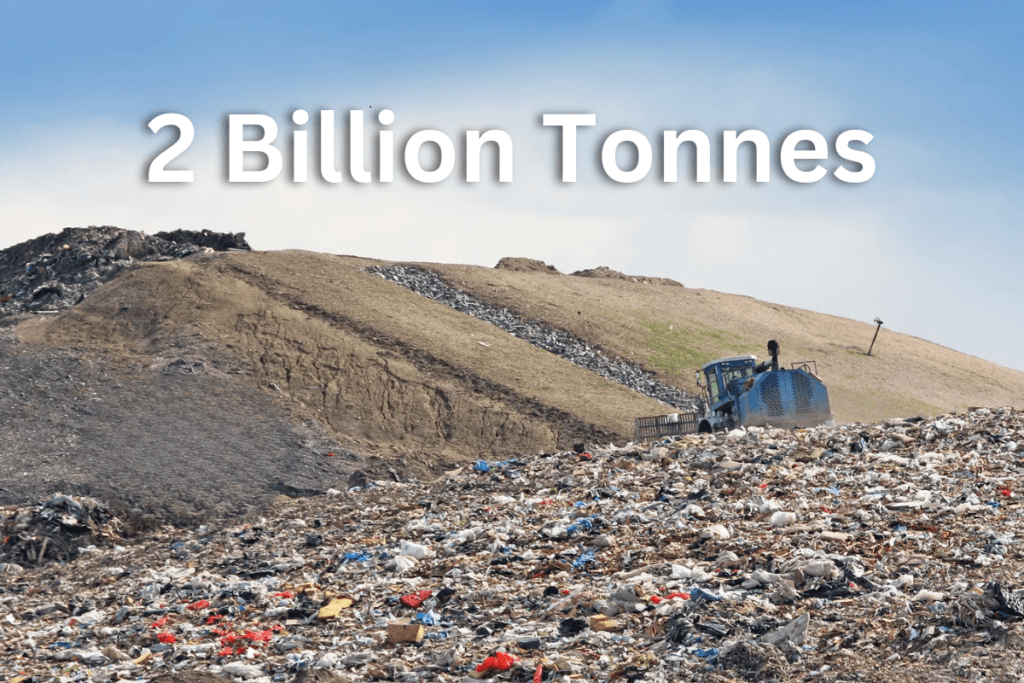
Landfills are vast depositories of waste that reflect the consumption patterns and disposal habits of society. The landfill sites play a crucial role in affecting public health and environmental balance. Here are some of the lesser-known facts about landfills that shed light on environmental consciousness.
## **Facts about Landfills**
Landfills stand as an element within global waste management systems, representing the ultimate destination for our ever-growing garbage volume. These vast areas act as storage spaces and overseers of our waste. However, they need planning, monitoring, and maintenance of thoughtful waste management. Here are some interesting facts about landfills.
### **1. Percentage and Composition of Food Waste in Landfills**

Globally, approximately 51% of landfill space is occupied by food waste, totaling a staggering [66,216,242 tons](https://www.epa.gov/system/files/documents/2023-03/2019%20Wasted%20Food%20Report_508_opt_ec.pdf). This waste originates from manufacturing, residential areas, supermarkets, hotels, military installations, venues, hospitals, restaurants, and households.
- **14% of the world’s food**, worth $400 billion, is lost annually from harvest to retail.
- Food loss and waste** contribute to about 7%** of global greenhouse gas emissions.
- **30% of global agricultural land** is used for food production, showing the impact of food loss and waste.
| **Landfill food wastage in sectors** | **Percentage approximately** |
| --- | --- |
| Residences | 40% |
| Wholesale food | 6% |
| Restaurants | 27.7% |
| Supermarkets and retail | 13 % |
| Office buildings | 6% |
### **2. Methane Emission Leading to Global Warming**
Landfills are substantial contributors to methane. The generation of methane occurs in landfills under anaerobic (low-oxygen) conditions. Organic waste, including food scraps and yard waste, undergoes microbial decomposition in the absence of oxygen, resulting in the release of methane.
- Methane has a global warming potential over [80 times greater](https://www.epa.gov/lmop/basic-information-about-landfill-gas) than CO2 over 20 years.
- Municipal Solid Waste landfills in the USA emit methane equivalent to emissions from **23.1 million cars** in a year.
### **3. Increasing Fashion Waste Every Year**

Out of the 100 billion garments manufactured annually, around [92 million tonnes enter landfills](https://earth.org/statistics-about-fast-fashion-waste/). This number is projected to increase substantially, reaching up to 134 million tonnes per year by the end of 2030.
- Low recycling rates for clothing result in a significant amount being sent to landfills.
- Polyester and nylon clothing contribute to fashion waste in landfills.
- Chemicals like dyes and finishes used in textile production end up in landfills.
Also, check out [How can the Fashion Industry be more Sustainable?](https://energytheory.com/how-can-the-fashion-industry-be-more-sustainable/)
### **4. Affecting Birds’ Ecosystem**
Birds may benefit from landfills as a new food source, but this can disrupt their natural diet and ecosystem. The [bird population is decreasing](https://www.nrdc.org/stories/lure-landfills-how-garbage-changes-animal-behavior) rapidly due to these landfills.
Some species of birds affected by these landfills are:
- White Stork
- Migratory waterfowl
- Savannah Sparrow
- Eastern Meadowlark
- Bald Eagle
- Turkey Vulture
- Ring-billed Gull
### **5. Leading to Landslides**
Garbage landslides pose suffocation risks due to landfill gases like methane and carbon dioxide. Landfills often trigger landslides **by heavy rainfall, improper landfill design, overloading, or the accumulation of water** within the landfill. On March 11, 2017, in Addis Ababa, Ethiopia, [a tragic incident happened](https://www.bbc.com/news/world-africa-39247381) and people died because of a garbage landslide.
### **6. Affecting Groundwater Quality**

Landfills emit methane and carbon dioxide, contaminating groundwater and soil. Leachate from landfills and sediment pollutants impact on groundwater is huge. They pose a high risk to groundwater if not managed properly.
**Facts about Leachate Formation**
Rain can carry harmful substances from landfills to nearby land during heavy rainfall, contaminating agriculture. **Leachate forms when water passes through waste** and collects pollutants. This includes various heavy metals like iron (Fe), copper (Cu), cadmium (Cd), nickel (Ni), lead (Pb), zinc (Zn), and toxic chemicals.
Note that [geological and hydrological investigations](https://www.chintan-india.org/sites/default/files/2019-09/Ground%20Contamination.pdf) in Isparta Plain found significant contamination in the groundwater basin. The main cause of this **pollution was mainly due to the inadequate management of the city’s sewage system** and an open waste disposal site. Here both household and industrial wastes were carelessly thrown away.
**Also Read:** [25+ Ways to be More Environmentally Friendly at Home](https://energytheory.com/how-to-be-more-environmentally-friendly-at-home/)
### **7. Degrading Air Quality**
Landfills **release volatile organic compounds**, carbon monoxide, and hydrogen sulfide. These harmful air pollutants contribute to the formation of ground-level ozone and smog. They further lead to respiratory problems and other health issues. This can impact both human health and the health of ecosystems. Odor emissions negatively impact the quality of air in surrounding areas.
Predicted gaseous emissions for the landfill in the coming years by [National Library of Medicine,](https://www.ncbi.nlm.nih.gov/pmc/articles/PMC6582209/table/Tab5/?report=objectonly) National Center for Biotechnology Information, USA.
| **Year** | **Total Landfill gas Ton/Annum** |
| --- | --- |
| 2024 | 8.02 |
| 2025 | 8.97 |
| 2030 | 13.66 |
| 2035 | 18.37 |
### **8. Diminishing Soil Fertility**
The presence of [microplastics](https://energytheory.com/what-are-microplastics/) in terrestrial environments has been observed to negatively impact soil fauna. The study by [Royal Society Publishing](https://royalsocietypublishing.org/doi/10.1098/rspb.2020.1268) in 2020 highlights a decline in sub-surface-dwelling species. It mentions that mites, larvae, and other minuscule organisms are crucial for maintaining soil fertility.
### **9. Not Recycling Recyclables: Dismal Condition**
Each year, millions of tons of clothing, shoes, and textiles end up in landfills. These items can be recycled yet are thrown away. About [66% of the waste in landfills decomposes](https://www.bu.edu/sph/news/articles/2022/the-aftermath-of-fast-fashion-how-discarded-clothes-impact-public-health-and-the-environment/). However, there are items like glass, plastic, and tin cans that take a long time to decompose.
Glass and plastic take about 1 million years, while tin cans take 100 years. In America, only [30% of recyclable waste](https://www.dosomething.org/facts/11-facts-about-recycling) is recycled, even though it is high time to improve recycling habits.
**Also See:** [Recycling CO2 to Create Eco-Friendly Plastics](https://energytheory.com/recycling-co2-to-create-eco-friendly-plastics/)
### **10. Shocking** **Facts About Plastic Landfills**

Plastic waste buried in landfills takes hundreds of years to decompose, posing environmental challenges.
Here are some facts about plastic dumping in landfills:
- 36% of plastic production is used for packaging, with [85% ending up in landfills](https://www.unep.org/interactives/beat-plastic-pollution/#:~:text=Approximately%2036%20per%20cent%20of%20all%20plastics%20produced%20are%20used%20in%20packaging%2C%20including%20single%2Duse%20plastic%20products%20for%20food%20and%20beverage%20containers%2C%20approximately%2085%20per%20cent%20of%20which%20ends%20up%20in%20landfills%20or%20as%20unregulated%20waste.).
- 79% of global plastic production lingers in landfills or the natural environment.
- Excessive plastic use around [400 million tons](https://www.unep.org/resources/report/drowning-plastics-marine-litter-and-plastic-waste-vital-graphics) results in 60% of plastic waste in landfills.
- Approximately [40% plastic debris](https://www.biologicaldiversity.org/campaigns/ocean_plastics/#:~:text=Billions%20of%20pounds%20of%20plastic,in%20the%20sea%20by%202050.) is already covering the ocean surface, and there are possibilities of more plastic accumulation in the ocean by 2030.
****Also See:**** [30 Innovative Eco-Friendly Zero Waste Business Ideas](https://energytheory.com/zero-waste-business-ideas/)
### **Possibility of Converting Greenwaste to Electricity**

Green Waste from landfills is [converted into electricity in the UK](https://energysavingtrust.org.uk/generating-energy-waste-how-it-works/). Processing 5.5 million tonnes of food waste in this way could **generate enough energy to power around 164,000 households.** Further, it leads to saving around 0.22 to 0.35 million tonnes of CO2, as opposed to using composting methods.
Waste can be used to **generate energy through various methods like anaerobic digestion, combustion, gasification,** [landfill gas](https://energytheory.com/what-is-landfill-gas/) recovery, and pyrolysis. Extracting biogas from landfills is a declining but still significant source of energy. This method contributed 3.04TWh of electricity to the UK energy supply in the last year.
**Also See:** [Exploring a Novel Heat to Electricity Conversion Method](https://energytheory.com/exploring-a-novel-heat-to-electricity-conversion-method/)
### **Why are Landfills Bad: Reasons and Risks**
Landfills are considered detrimental for several reasons, primarily due to the environmental, health, and sustainability issues associated with their operation.
Here are some reasons why landfills are considered bad:
#### **1. Environmental Pollution**
Landfills contribute to soil, air, and water pollution. Leachate, a liquid formed as waste decomposes, can **contaminate groundwater** and nearby water bodies, carrying pollutants.
#### **2. Greenhouse Gas Emissions**
The decomposition of organic waste in landfills **produces methane,** a potent greenhouse gas that contributes to climate change.
#### **3. Waste of Resources**
Many materials in landfills, such as plastics, paper, and metals, could be recycled to conserve resources and reduce the need for raw materials.
#### **4. Potential for Accidents**
Landfills can pose safety risks, including fires, explosions, and the release of hazardous materials. They can become unstable due to spontaneous combustion or excessive accumulation. This** poses the danger of landslides** or collapses for plant workers and nearby areas.
#### **5. Long-Term Environmental Impact**
Some materials in landfills can take hundreds or even thousands of years to decompose. This environmental impact of landfills can persist for generations, affecting future ecosystems and communities.
**Also See:** [26 Solar Panel Recycling Companies](https://energytheory.com/solar-panel-recycling-companies/)
#### **6. Leads to Climate Changes**
Landfill sites release [biogas](https://energytheory.com/what-is-biogas/), contributing to global warming. If action is not taken, they will account for 10% of greenhouse gas emissions by 2025. Degassing methods aim to capture methane but have drawbacks.
#### **7. Can cause Fires or Explosions**
Methane from landfill waste can cause explosions and fires. These fires occur inside the landfill and release harmful dioxin emissions that damage the environment and aquifers.
#### **8. Landfills Alter the Fauna**
Landfill sites harm bird migration by causing disruptions and ingesting harmful materials. This worsens with each new generation.
#### **9. Affects the Value of Surrounding Areas**
Landfill sites **emit bad smells** that reach nearby populations and reduce property prices in the area, perpetuating the devaluation of disadvantaged areas.
#### **10. Dangerous for Humans**
Workers in landfills are at risk of contracting infectious and chronic diseases due to the fermentation of organic waste. Hazardous waste exposure affects human health, especially children, **leading to diseases and chemical poisoning**. [Studies](https://www.ncbi.nlm.nih.gov/pmc/articles/PMC6617357/#:~:text=Cancer%20and%20other%20respiratory%20allergies,wall%20of%20Gram%2Dnegative%20bacteria) show a strong link between pollutants emitted from landfills and lung cancer, respiratory diseases, and deaths in children. Landfills also contaminate soil and crops, which can ultimately poison humans who consume them directly or indirectly through animal products.
Here are key facts about landfills and plastic waste. This highlights the importance of implementing waste management and recycling methods to safeguard future generations, ensuring good health and environmental preservation.
**Recommended**: [How to Reduce the Use of Plastic in Agriculture](https://energytheory.com/use-of-plastic-in-agriculture/)
Share. [Facebook](https://www.facebook.com/sharer.php?u=https%3A%2F%2Fenergytheory.com%2Ffacts-about-landfills%2F "Share on Facebook") [Twitter](https://twitter.com/intent/tweet?url=https%3A%2F%2Fenergytheory.com%2Ffacts-about-landfills%2F&text=10%20Interesting%20Landfills%20Facts%20and%20Stats "Share on X (Twitter)") [Pinterest](https://pinterest.com/pin/create/button/?url=https%3A%2F%2Fenergytheory.com%2Ffacts-about-landfills%2F&media=https%3A%2F%2Fenergytheory.com%2Fwp-content%2Fuploads%2F2024%2F01%2Ffacts-about-landfills.webp&description=10%20Interesting%20Landfills%20Facts%20and%20Stats "Share on Pinterest") [LinkedIn](https://www.linkedin.com/shareArticle?mini=true&url=https%3A%2F%2Fenergytheory.com%2Ffacts-about-landfills%2F "Share on LinkedIn") [Tumblr](https://www.tumblr.com/share/link?url=https%3A%2F%2Fenergytheory.com%2Ffacts-about-landfills%2F&name=10%20Interesting%20Landfills%20Facts%20and%20Stats "Share on Tumblr") [Telegram](https://t.me/share/url?url=https%3A%2F%2Fenergytheory.com%2Ffacts-about-landfills%2F&title=10%20Interesting%20Landfills%20Facts%20and%20Stats "Share on Telegram") [Email](mailto:?subject=10%20Interesting%20Landfills%20Facts%20and%20Stats&body=https%3A%2F%2Fenergytheory.com%2Ffacts-about-landfills%2F "Share via Email")

[Olivia Bolt](https://energytheory.com/author/olivia_bolt/)
Olivia is committed to green energy and works to help ensure our planet's long-term habitability. She takes part in environmental conservation by recycling and avoiding single-use plastic.
#### Related Posts
[](https://energytheory.com/plastic-petrochemicals-and-climate/ "Plastic, Petrochemicals, and Climate: The Hidden Culprit")
#### [Plastic, Petrochemicals, and Climate: The Hidden Culprit](https://energytheory.com/plastic-petrochemicals-and-climate/)
June 21, 2024
[](https://energytheory.com/top-young-environmentalist-and-climate-activist/ "Top 18 Young Environmentalist and Climate Activist – Rising Up Against Climate Change")
#### [Top 18 Young Environmentalist and Climate Activist – Rising Up Against Climate Change](https://energytheory.com/top-young-environmentalist-and-climate-activist/)
June 7, 2024
[](https://energytheory.com/top-notable-voices-on-climate-change/ "Top 30 Notable Voices on Climate Change")
#### [Top 30 Notable Voices on Climate Change](https://energytheory.com/top-notable-voices-on-climate-change/)
June 7, 2024
Add A Comment
Leave A Reply [Cancel Reply](https://energytheory.com/facts-about-landfills/#respond)
Save my name, email, and website in this browser for the next time I comment.
Submit
Type above and press *Enter* to search. Press *Esc* to cancel.
```json
{"@context":"https:\/\/schema.org","@graph":[{"@type":"Article","@id":"https:\/\/energytheory.com\/facts-about-landfills\/#article","isPartOf":{"@id":"https:\/\/energytheory.com\/facts-about-landfills\/"},"author":{"name":"Olivia Bolt","@id":"https:\/\/energytheory.com\/#\/schema\/person\/b13704b48c0839ab40218296652c13b8"},"headline":"10 Interesting Landfills Facts and Stats","datePublished":"2024-01-10T17:41:36+00:00","dateModified":"2024-01-11T13:51:46+00:00","mainEntityOfPage":{"@id":"https:\/\/energytheory.com\/facts-about-landfills\/"},"wordCount":1455,"commentCount":0,"publisher":{"@id":"https:\/\/energytheory.com\/#organization"},"image":{"@id":"https:\/\/energytheory.com\/facts-about-landfills\/#primaryimage"},"thumbnailUrl":"https:\/\/energytheory.com\/wp-content\/uploads\/2024\/01\/facts-about-landfills.webp","keywords":["interesting facts about landfills","plastic landfills"],"articleSection":["Climate Change"],"inLanguage":"en-US","potentialAction":[{"@type":"CommentAction","name":"Comment","target":["https:\/\/energytheory.com\/facts-about-landfills\/#respond"]}]},{"@type":"WebPage","@id":"https:\/\/energytheory.com\/facts-about-landfills\/","url":"https:\/\/energytheory.com\/facts-about-landfills\/","name":"10 Interesting Landfills Facts and Stats - Energy Theory","isPartOf":{"@id":"https:\/\/energytheory.com\/#website"},"primaryImageOfPage":{"@id":"https:\/\/energytheory.com\/facts-about-landfills\/#primaryimage"},"image":{"@id":"https:\/\/energytheory.com\/facts-about-landfills\/#primaryimage"},"thumbnailUrl":"https:\/\/energytheory.com\/wp-content\/uploads\/2024\/01\/facts-about-landfills.webp","datePublished":"2024-01-10T17:41:36+00:00","dateModified":"2024-01-11T13:51:46+00:00","description":"Facts about Landfills: It leads to methane emissions, air quality degradation, soil fertility decline, and increased landslide risks.","breadcrumb":{"@id":"https:\/\/energytheory.com\/facts-about-landfills\/#breadcrumb"},"inLanguage":"en-US","potentialAction":[{"@type":"ReadAction","target":["https:\/\/energytheory.com\/facts-about-landfills\/"]}]},{"@type":"ImageObject","inLanguage":"en-US","@id":"https:\/\/energytheory.com\/facts-about-landfills\/#primaryimage","url":"https:\/\/energytheory.com\/wp-content\/uploads\/2024\/01\/facts-about-landfills.webp","contentUrl":"https:\/\/energytheory.com\/wp-content\/uploads\/2024\/01\/facts-about-landfills.webp","width":1200,"height":800,"caption":"facts about landfills"},{"@type":"BreadcrumbList","@id":"https:\/\/energytheory.com\/facts-about-landfills\/#breadcrumb","itemListElement":[{"@type":"ListItem","position":1,"name":"Home","item":"https:\/\/energytheory.com\/"},{"@type":"ListItem","position":2,"name":"Climate Change","item":"https:\/\/energytheory.com\/category\/climate-change\/"},{"@type":"ListItem","position":3,"name":"10 Interesting Landfills Facts and Stats"}]},{"@type":"WebSite","@id":"https:\/\/energytheory.com\/#website","url":"https:\/\/energytheory.com\/","name":"Energy Theory","description":"Conserve energy to preserve future","publisher":{"@id":"https:\/\/energytheory.com\/#organization"},"potentialAction":[{"@type":"SearchAction","target":{"@type":"EntryPoint","urlTemplate":"https:\/\/energytheory.com\/?s={search_term_string}"},"query-input":{"@type":"PropertyValueSpecification","valueRequired":true,"valueName":"search_term_string"}}],"inLanguage":"en-US"},{"@type":"Organization","@id":"https:\/\/energytheory.com\/#organization","name":"Energy Theory","url":"https:\/\/energytheory.com\/","logo":{"@type":"ImageObject","inLanguage":"en-US","@id":"https:\/\/energytheory.com\/#\/schema\/logo\/image\/","url":"https:\/\/energytheory.com\/wp-content\/uploads\/2022\/11\/2e3rtgthghnm.png","contentUrl":"https:\/\/energytheory.com\/wp-content\/uploads\/2022\/11\/2e3rtgthghnm.png","width":625,"height":57,"caption":"Energy Theory"},"image":{"@id":"https:\/\/energytheory.com\/#\/schema\/logo\/image\/"},"sameAs":["https:\/\/www.facebook.com\/energytheoryco"]},{"@type":"Person","@id":"https:\/\/energytheory.com\/#\/schema\/person\/b13704b48c0839ab40218296652c13b8","name":"Olivia Bolt","image":{"@type":"ImageObject","inLanguage":"en-US","@id":"https:\/\/secure.gravatar.com\/avatar\/e44b6048cc46ab5ff090bb0f7eab60cc3364aba06f873623f727e8a9215b302a?s=96&d=mm&r=g","url":"https:\/\/secure.gravatar.com\/avatar\/e44b6048cc46ab5ff090bb0f7eab60cc3364aba06f873623f727e8a9215b302a?s=96&d=mm&r=g","contentUrl":"https:\/\/secure.gravatar.com\/avatar\/e44b6048cc46ab5ff090bb0f7eab60cc3364aba06f873623f727e8a9215b302a?s=96&d=mm&r=g","caption":"Olivia Bolt"},"description":"Olivia is committed to green energy and works to help ensure our planet's long-term habitability. She takes part in environmental conservation by recycling and avoiding single-use plastic.","url":"https:\/\/energytheory.com\/author\/olivia_bolt\/"}]}
```