












---
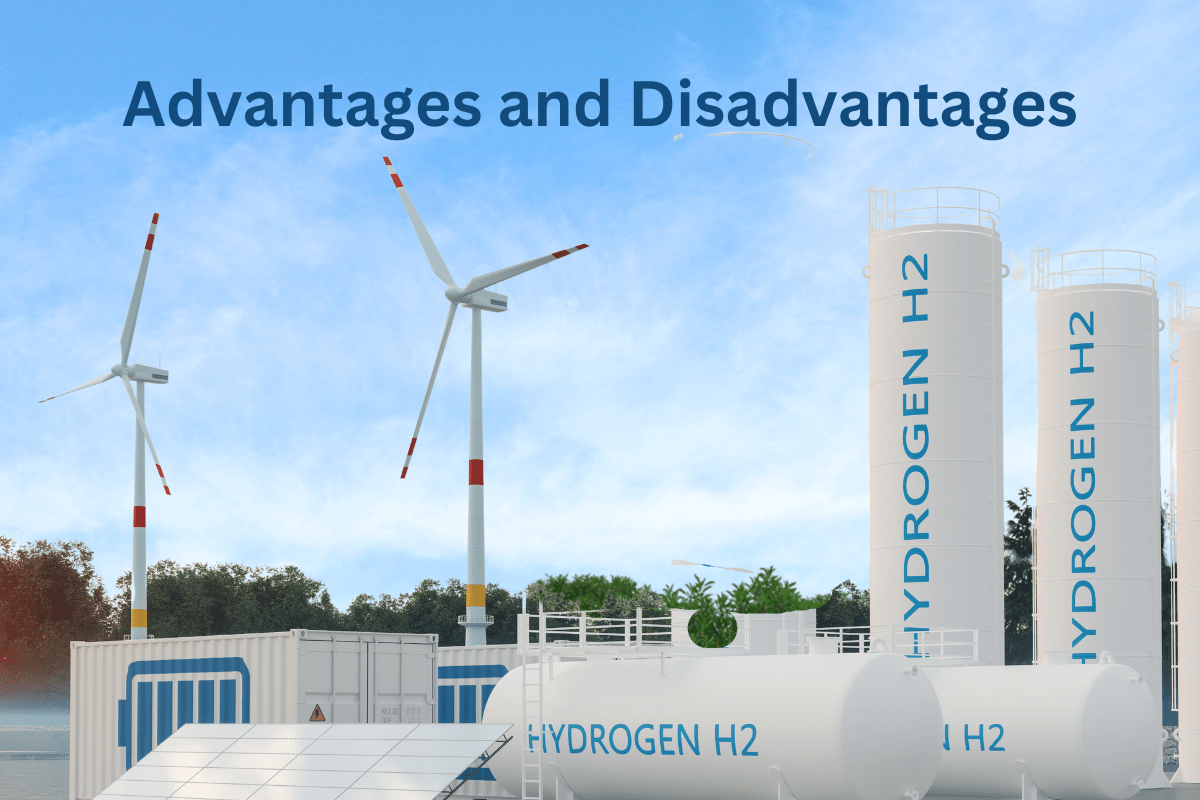
description: "Advantages and Disadvantages of Hydrogen Energy: It provides backup power, whereas there are concerns regarding its infrastructure &amp; cost."
title: "Hydrogen Energy: Advantages and Disadvantages - Energy Theory"
image: https://energytheory.com/wp-content/uploads/2024/03/Hydrogen-Energy-Advantages-and-Disadvantages.png
---

Close Menu

- [About](https://energytheory.com/about-us/)
- [EV](https://energytheory.com/category/electric-vehicles/)
- [FAQs](https://energytheory.com/category/faqs/)
- [Glossary](https://energytheory.com/category/glossary/)
- [Green](https://energytheory.com/category/green/)
  - [Renewable](https://energytheory.com/category/renewable/)
  - [Sustainable](https://energytheory.com/category/sustainable/)
- [Energy Economy](https://energytheory.com/category/energy-economy/)
- [Energy Services](https://energytheory.com/category/energy-services/)
- [Solar](https://energytheory.com/category/solar/)
- [Sustainable](https://energytheory.com/category/sustainable/)
- [News](https://energytheory.com/category/latest-news/)
- Language

[![Energy Theory](https://energytheory.com/wp-content/uploads/2022/11/2e3rtgthghnm.png)](https://energytheory.com/ "Energy Theory")

![en](https://cdn.gtranslate.net/flags/svg/en.svg) English

![es](https://cdn.gtranslate.net/flags/svg/es.svg) Spanish ![fr](https://cdn.gtranslate.net/flags/svg/fr.svg) French ![en](https://cdn.gtranslate.net/flags/svg/en.svg) English ![it](https://cdn.gtranslate.net/flags/svg/it.svg) Italian ![zh-CN](https://cdn.gtranslate.net/flags/svg/zh-CN.svg) Chinese (Simplified) ![nl](https://cdn.gtranslate.net/flags/svg/nl.svg) Dutch ![fi](https://cdn.gtranslate.net/flags/svg/fi.svg) Finnish ![de](https://cdn.gtranslate.net/flags/svg/de.svg) German ![hi](https://cdn.gtranslate.net/flags/svg/hi.svg) Hindi ![ja](https://cdn.gtranslate.net/flags/svg/ja.svg) Japanese ![pl](https://cdn.gtranslate.net/flags/svg/pl.svg) Polish ![pt](https://cdn.gtranslate.net/flags/svg/pt.svg) Portuguese ![ru](https://cdn.gtranslate.net/flags/svg/ru.svg) Russian

[![Energy Theory](https://energytheory.com/wp-content/uploads/2022/11/2e3rtgthghnm.png)](https://energytheory.com/ "Energy Theory")

![en](https://cdn.gtranslate.net/flags/svg/en.svg) English

![es](https://cdn.gtranslate.net/flags/svg/es.svg) Spanish ![fr](https://cdn.gtranslate.net/flags/svg/fr.svg) French ![en](https://cdn.gtranslate.net/flags/svg/en.svg) English ![it](https://cdn.gtranslate.net/flags/svg/it.svg) Italian ![zh-CN](https://cdn.gtranslate.net/flags/svg/zh-CN.svg) Chinese (Simplified) ![nl](https://cdn.gtranslate.net/flags/svg/nl.svg) Dutch ![fi](https://cdn.gtranslate.net/flags/svg/fi.svg) Finnish ![de](https://cdn.gtranslate.net/flags/svg/de.svg) German ![hi](https://cdn.gtranslate.net/flags/svg/hi.svg) Hindi ![ja](https://cdn.gtranslate.net/flags/svg/ja.svg) Japanese ![pl](https://cdn.gtranslate.net/flags/svg/pl.svg) Polish ![pt](https://cdn.gtranslate.net/flags/svg/pt.svg) Portuguese ![ru](https://cdn.gtranslate.net/flags/svg/ru.svg) Russian

[Hydro](https://energytheory.com/category/hydro/)

# Hydrogen Energy: Advantages and Disadvantages

Global production stands at 75 MtH2/yr as pure hydrogen and 45 MtH2/yr as gas mix, equivalent to 3% of world energy demand.

By [Olivia Bolt](https://energytheory.com/author/olivia_bolt/)March 5, 20245 Mins Read

![Hydrogen Energy Advantages and Disadvantages](https://energytheory.com/wp-content/uploads/2024/03/Hydrogen-Energy-Advantages-and-Disadvantages.webp "Hydrogen Energy: Advantages and Disadvantages")

In a quest for environmental concerns and energy sustainability around the globe, hydrogen energy has emerged as a clean and more efficient option. This technology is growing rapidly and the annual production of this low-emission gas is expected to reach up to [38 million metric tons](https://www.iea.org/energy-system/low-emission-fuels/hydrogen) by 2030. Today let us learn about the advantages and disadvantages of hydrogen energy.

## **Hydrogen Energy: Advantages and Disadvantages**

This clean energy refers to the use of hydrogen as a fuel or energy carrier to **produce power or heat** for various applications. The method of utilizing this energy is processed through fuel cells where hydrogen reacts with oxygen. It produces electricity, heat, and water vapor, with no harmful emissions making it a sustainable energy source.

The advantages and disadvantages of hydrogen energy are briefly given below:

| **Pros** | **Cons** |
| --- | --- |
| It produces only water vapor as a byproduct when used as a fuel, there are no direct emissions. | Due to its **highly reactive** nature, storage is a hassle. |
| Hydrogen combines with oxygen to **produce energy for electric appliances**, without releasing CO2. | Carbon footprint is not completely avoided because fossil fuel is used for extraction. |
| These fuel cells offer power for homes and off-grid replacing batteries and fossil fuel generators. | Infrastructure is still developing. |
| Energy from hydrogen is consistent. | There are **production challenges** due to its highly reactive nature. |
| Fuel cells can supplement existing power resources, due to to compatibility with various receptors. | High density per volume is low so requires larger tanks for transportation. |
| **Can store** for extended durations. | Electricity production through electrolysis is an **expensive procedure**. |

Now, let’s explore hydrogen energy’s benefits and drawbacks in detail.

### **Benefits of Hydrogen Energy**

![Hydrogen renewable energy storage: hydrogen energy advantages and disadvantages](https://energytheory.com/wp-content/uploads/2024/03/hydrogen-energy-storage.jpg)

Some major pros of hydrogen energy are:

**1. Clean Energy:** Unlike fossil fuels, which emit pollutants and greenhouse gases upon combustion, hydrogen **generates only water vapor** when utilized as a fuel. When renewable energy sources are used for its production, there are no direct emissions, resulting in what is known as [green hydrogen](https://energytheory.com/what-is-green-hydrogen/).

Conversely, hydrogen derived from fossil fuels, such as natural gas, is termed grey hydrogen. If carbon capture is adopted during production, **grey hydrogen can transition to blue hydrogen.**

**2. Non-toxic Resource:** It combines with oxygen to produce energy that can power electric appliances. Like other power sources, hydrogen combustion **does not release carbon dioxide** into the atmosphere. 

**3. Residential and Portable Power:** Fuel cells can provide **backup power systems for homes or off-grid cabins.** Portable fuel cell systems can also be used to power electronic devices, hospitals, camping equipment, and remote sensors, offering an alternative to batteries or fossil fuel generators. 

**4. Minimal Degradation Concerns:** Once energy is derived from hydrogen, its reliability remains consistent. Unlike other energy sources that may face challenges in maintaining transmission levels, this energy **stands out for its reliability**. Among other resources, natural gas often emerges as one of the most efficient options. 

**5. Lower Installation Charges:** This energy presents fewer installation challenges compared to conventional energy sources. Compatibility with various receptors enables fuel cells to supplement available power alongside other resources. 

**6. Less Fuel Cell Space:** It can be **stored in compact and small fuel cells** that enable flexible installation in various locations. When integrated into a fuel cell, hydrogen can be utilized across diverse geographic locations, offering flexibility in energy applications.  

**7. Independent Energy Source:** Nations lacking access to oil often depend heavily on imports to fulfill their domestic energy requirements. By investing in this clean energy, these countries stand to significantly reduce their reliance on foreign energy sources.  

**8. Energy Storage:** Hydrogen is an effective solution for **storing renewable energy over extended durations**, addressing the challenges of intermittency and storage that currently hinder the widespread adoption of renewables.   

**Also Read:**  [The Hydrogen Era: Insights into the Upcoming U.S. Energy Transformation](https://energytheory.com/insights-into-the-upcoming-u-s-energy-transformation/)

### **Disadvantages of Hydrogen Energy**

The common limitations of this energy are: 

**1. Expensive Production:** Generating hydrogen through electrolysis using renewable electricity can be costly and energy-intensive, limiting its scalability. 

**2. Storage Challenge:** It is a **highly reactive and low-density gas**, which presents challenges for storage and distribution. Current infrastructure for hydrogen storage and transportation is limited, requiring significant investments in infrastructure development. 

**3. Highly Inflammable:** It is highly flammable and combustible, **posing safety risks** during production.** **

**4. Carbon Footprint Effects:** It depends on the steam methane reformation. It emits carbon dioxide, offsetting the environmental benefits as a fuel. Moreover, during the process of electrolysis to produce green hydrogen, approximately [30 to 35% of the energy](https://earth.org/pros-and-cons-of-hydrogen-energy/) is lost.

**5. Transportation Challenges:** Its energy density per volume is relatively low compared to other fuels like gasoline or diesel. This means that storing and transporting hydrogen** requires larger tanks** or storage systems which are bulky and tough.

**6. Infrastructure Challenges:** Most of the energy systems were designed for fossil fuels, but as renewables like solar and wind emerged, they could be integrated with existing infrastructure. However, hydrogen energy **requires special fuel cells for storage**, which could be challenging.

> Cross-reference: [Hydrogen Production and Infrastructure Projects Database](https://www.iea.org/data-and-statistics/data-product/hydrogen-production-and-infrastructure-projects-database)

### **Is Hydrogen Energy Worth It?**

Going through these advantages and disadvantages would offer insights into the role of hydrogen in our energy future. Despite being a clean, versatile, and **sustainable energy source, it is highly reactive** and has its fair share of challenges. To explore such informative topics, keep exploring our website.

**Recommended:** [Hydrogen Energy: Working and Uses](https://energytheory.com/hydrogen-energy-work/)

Share. [Facebook](https://www.facebook.com/sharer.php?u=https%3A%2F%2Fenergytheory.com%2Fhydrogen-energy-advantages-and-disadvantages%2F "Share on Facebook") [Twitter](https://twitter.com/intent/tweet?url=https%3A%2F%2Fenergytheory.com%2Fhydrogen-energy-advantages-and-disadvantages%2F&text=Hydrogen%20Energy%3A%20Advantages%20and%20Disadvantages "Share on X (Twitter)") [Pinterest](https://pinterest.com/pin/create/button/?url=https%3A%2F%2Fenergytheory.com%2Fhydrogen-energy-advantages-and-disadvantages%2F&media=https%3A%2F%2Fenergytheory.com%2Fwp-content%2Fuploads%2F2024%2F03%2FHydrogen-Energy-Advantages-and-Disadvantages.webp&description=Hydrogen%20Energy%3A%20Advantages%20and%20Disadvantages "Share on Pinterest") [LinkedIn](https://www.linkedin.com/shareArticle?mini=true&url=https%3A%2F%2Fenergytheory.com%2Fhydrogen-energy-advantages-and-disadvantages%2F "Share on LinkedIn") [Tumblr](https://www.tumblr.com/share/link?url=https%3A%2F%2Fenergytheory.com%2Fhydrogen-energy-advantages-and-disadvantages%2F&name=Hydrogen%20Energy%3A%20Advantages%20and%20Disadvantages "Share on Tumblr") [Telegram](https://t.me/share/url?url=https%3A%2F%2Fenergytheory.com%2Fhydrogen-energy-advantages-and-disadvantages%2F&title=Hydrogen%20Energy%3A%20Advantages%20and%20Disadvantages "Share on Telegram") [Email](mailto:?subject=Hydrogen%20Energy%3A%20Advantages%20and%20Disadvantages&body=https%3A%2F%2Fenergytheory.com%2Fhydrogen-energy-advantages-and-disadvantages%2F "Share via Email")

![mm](https://energytheory.com/wp-content/uploads/2023/04/Olivia-150x150.jpg)

[Olivia Bolt](https://energytheory.com/author/olivia_bolt/)

Olivia is committed to green energy and works to help ensure our planet's long-term habitability. She takes part in environmental conservation by recycling and avoiding single-use plastic.

#### Related Posts

[![Ultrastable and efficient Dion-Jacobson perovskite solar cells](https://energytheory.com/wp-content/uploads/2024/08/Ultrastable-2D-Dion-Jacobson-Perovskites-Achieves-19.11-Efficiency-300x200.png "Ultrastable 2D Dion-Jacobson Perovskites Achieves 19.11% Efficiency")](https://energytheory.com/ultrastable-2d-dion-jacobson-perovskites-achieves-19-11-efficiency/ "Ultrastable 2D Dion-Jacobson Perovskites Achieves 19.11% Efficiency")

#### [Ultrastable 2D Dion-Jacobson Perovskites Achieves 19.11% Efficiency](https://energytheory.com/ultrastable-2d-dion-jacobson-perovskites-achieves-19-11-efficiency/)

August 13, 2024

[![Solar Panels Vs Solar Shingles Major Differences \& Comparisons](https://energytheory.com/wp-content/uploads/2024/08/Solar-Panels-Vs-Solar-Shingles-300x200.png "Solar Panels Vs Solar Shingles: Major Differences & Comparisons")](https://energytheory.com/solar-panels-vs-solar-shingles-major-differences-comparisons/ "Solar Panels Vs Solar Shingles: Major Differences & Comparisons")

#### [Solar Panels Vs Solar Shingles: Major Differences & Comparisons](https://energytheory.com/solar-panels-vs-solar-shingles-major-differences-comparisons/)

August 5, 2024

[![Top climate tech companies and startups](https://energytheory.com/wp-content/uploads/2024/06/Top-30-Climate-Tech-Companies-and-Startups-300x200.png "Top 30 Climate Tech Companies and Startups")](https://energytheory.com/top-climate-tech-companies-and-startups/ "Top 30 Climate Tech Companies and Startups")

#### [Top 30 Climate Tech Companies and Startups](https://energytheory.com/top-climate-tech-companies-and-startups/)

June 8, 2024

Add A Comment

Leave A Reply [Cancel Reply](https://energytheory.com/hydrogen-energy-advantages-and-disadvantages/#respond)

Save my name, email, and website in this browser for the next time I comment.

Submit

Type above and press *Enter* to search. Press *Esc* to cancel.

```json
{"@context":"https:\/\/schema.org","@graph":[{"@type":"Article","@id":"https:\/\/energytheory.com\/hydrogen-energy-advantages-and-disadvantages\/#article","isPartOf":{"@id":"https:\/\/energytheory.com\/hydrogen-energy-advantages-and-disadvantages\/"},"author":{"name":"Olivia Bolt","@id":"https:\/\/energytheory.com\/#\/schema\/person\/b13704b48c0839ab40218296652c13b8"},"headline":"Hydrogen Energy: Advantages and Disadvantages","datePublished":"2023-01-09T18:50:25+00:00","dateModified":"2024-03-05T16:43:24+00:00","mainEntityOfPage":{"@id":"https:\/\/energytheory.com\/hydrogen-energy-advantages-and-disadvantages\/"},"wordCount":877,"commentCount":0,"publisher":{"@id":"https:\/\/energytheory.com\/#organization"},"image":{"@id":"https:\/\/energytheory.com\/hydrogen-energy-advantages-and-disadvantages\/#primaryimage"},"thumbnailUrl":"https:\/\/energytheory.com\/wp-content\/uploads\/2024\/03\/Hydrogen-Energy-Advantages-and-Disadvantages.webp","keywords":["advantages of hydrogen energy","Hydrogen Energy Advantages and Disadvantages","hydrogen energy disadvantages","Pros and cons of hydrogen energy"],"articleSection":["Hydro","Reviews &amp; Comparison"],"inLanguage":"en-US","potentialAction":[{"@type":"CommentAction","name":"Comment","target":["https:\/\/energytheory.com\/hydrogen-energy-advantages-and-disadvantages\/#respond"]}]},{"@type":"WebPage","@id":"https:\/\/energytheory.com\/hydrogen-energy-advantages-and-disadvantages\/","url":"https:\/\/energytheory.com\/hydrogen-energy-advantages-and-disadvantages\/","name":"Hydrogen Energy: Advantages and Disadvantages - Energy Theory","isPartOf":{"@id":"https:\/\/energytheory.com\/#website"},"primaryImageOfPage":{"@id":"https:\/\/energytheory.com\/hydrogen-energy-advantages-and-disadvantages\/#primaryimage"},"image":{"@id":"https:\/\/energytheory.com\/hydrogen-energy-advantages-and-disadvantages\/#primaryimage"},"thumbnailUrl":"https:\/\/energytheory.com\/wp-content\/uploads\/2024\/03\/Hydrogen-Energy-Advantages-and-Disadvantages.webp","datePublished":"2023-01-09T18:50:25+00:00","dateModified":"2024-03-05T16:43:24+00:00","description":"Advantages and Disadvantages of Hydrogen Energy: It provides backup power, whereas there are concerns regarding its infrastructure & cost.","breadcrumb":{"@id":"https:\/\/energytheory.com\/hydrogen-energy-advantages-and-disadvantages\/#breadcrumb"},"inLanguage":"en-US","potentialAction":[{"@type":"ReadAction","target":["https:\/\/energytheory.com\/hydrogen-energy-advantages-and-disadvantages\/"]}]},{"@type":"ImageObject","inLanguage":"en-US","@id":"https:\/\/energytheory.com\/hydrogen-energy-advantages-and-disadvantages\/#primaryimage","url":"https:\/\/energytheory.com\/wp-content\/uploads\/2024\/03\/Hydrogen-Energy-Advantages-and-Disadvantages.webp","contentUrl":"https:\/\/energytheory.com\/wp-content\/uploads\/2024\/03\/Hydrogen-Energy-Advantages-and-Disadvantages.webp","width":1200,"height":800,"caption":"Hydrogen Energy Advantages and Disadvantages"},{"@type":"BreadcrumbList","@id":"https:\/\/energytheory.com\/hydrogen-energy-advantages-and-disadvantages\/#breadcrumb","itemListElement":[{"@type":"ListItem","position":1,"name":"Home","item":"https:\/\/energytheory.com\/"},{"@type":"ListItem","position":2,"name":"Hydro","item":"https:\/\/energytheory.com\/category\/hydro\/"},{"@type":"ListItem","position":3,"name":"Hydrogen Energy: Advantages and Disadvantages"}]},{"@type":"WebSite","@id":"https:\/\/energytheory.com\/#website","url":"https:\/\/energytheory.com\/","name":"Energy Theory","description":"Conserve energy to preserve future","publisher":{"@id":"https:\/\/energytheory.com\/#organization"},"potentialAction":[{"@type":"SearchAction","target":{"@type":"EntryPoint","urlTemplate":"https:\/\/energytheory.com\/?s={search_term_string}"},"query-input":{"@type":"PropertyValueSpecification","valueRequired":true,"valueName":"search_term_string"}}],"inLanguage":"en-US"},{"@type":"Organization","@id":"https:\/\/energytheory.com\/#organization","name":"Energy Theory","url":"https:\/\/energytheory.com\/","logo":{"@type":"ImageObject","inLanguage":"en-US","@id":"https:\/\/energytheory.com\/#\/schema\/logo\/image\/","url":"https:\/\/energytheory.com\/wp-content\/uploads\/2022\/11\/2e3rtgthghnm.png","contentUrl":"https:\/\/energytheory.com\/wp-content\/uploads\/2022\/11\/2e3rtgthghnm.png","width":625,"height":57,"caption":"Energy Theory"},"image":{"@id":"https:\/\/energytheory.com\/#\/schema\/logo\/image\/"},"sameAs":["https:\/\/www.facebook.com\/energytheoryco"]},{"@type":"Person","@id":"https:\/\/energytheory.com\/#\/schema\/person\/b13704b48c0839ab40218296652c13b8","name":"Olivia Bolt","image":{"@type":"ImageObject","inLanguage":"en-US","@id":"https:\/\/secure.gravatar.com\/avatar\/e44b6048cc46ab5ff090bb0f7eab60cc3364aba06f873623f727e8a9215b302a?s=96&d=mm&r=g","url":"https:\/\/secure.gravatar.com\/avatar\/e44b6048cc46ab5ff090bb0f7eab60cc3364aba06f873623f727e8a9215b302a?s=96&d=mm&r=g","contentUrl":"https:\/\/secure.gravatar.com\/avatar\/e44b6048cc46ab5ff090bb0f7eab60cc3364aba06f873623f727e8a9215b302a?s=96&d=mm&r=g","caption":"Olivia Bolt"},"description":"Olivia is committed to green energy and works to help ensure our planet's long-term habitability. She takes part in environmental conservation by recycling and avoiding single-use plastic.","url":"https:\/\/energytheory.com\/author\/olivia_bolt\/"}]}
```
