













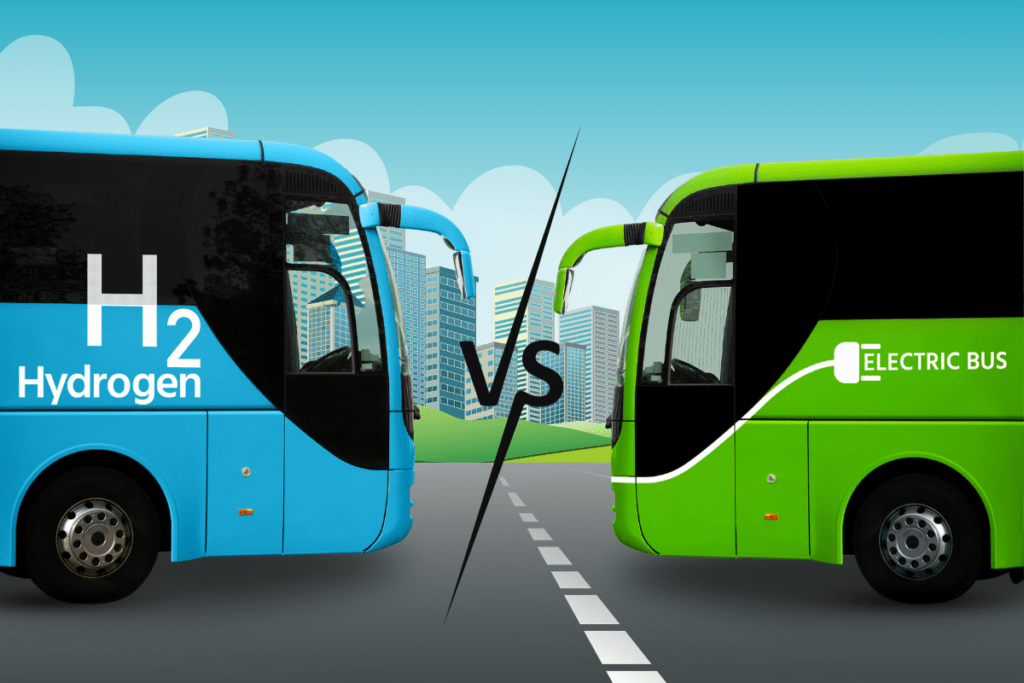
A disponibilidade limitada de combustível de petróleo e as preocupações com as emissões de gases nocivos nos levaram a buscar meios de transporte alternativos, como veículos elétricos e veículos movidos a hidrogênio. O debate entre células de combustível de hidrogênio e ônibus elétricos a bateria já dura anos, com ambos oferecendo vantagens únicas um sobre o outro. Vamos fazer uma análise comparativa entre ônibus elétricos e ônibus com células de combustível de hidrogênio para ajudar você a decidir qual pode ser mais adequado para você.
Ônibus elétrico a bateria x ônibus a combustível
Antes de mergulhar na comparação entre ônibus elétrico a bateria e ônibus movido a combustível, vamos entendê-los primeiro.
Barramento elétrico a bateria
Em termos simples, um ônibus elétrico é um tipo de veículo elétrico que funciona com eletricidade em vez de qualquer tipo de combustível, como gasolina ou diesel. Os ônibus elétricos a bateria (BEVs) são basicamente movidos a eletricidade proveniente de baterias recarregáveis de alta capacidade , normalmente baterias de íon-lítio . A bateria instalada no ônibus é carregada na estação de carregamento para fornecer energia ao motor que impulsiona as rodas.
Os ônibus elétricos estão se tornando cada vez mais populares e comuns nas estradas devido ao avanço na tecnologia de baterias e à baixa dependência de combustíveis fósseis.
Os veículos elétricos a bateria (BEVs) são classificados principalmente em dois tipos: aqueles com extensores de autonomia e aqueles sem. Os extensores de autonomia são pequenos motores a gasolina que geram eletricidade, aumentando a autonomia do BEV ao reduzir a dependência exclusiva das baterias. Por outro lado, os BEVs sem extensores de autonomia são, por vezes, considerados veículos totalmente elétricos.
Ônibus de célula de combustível de hidrogênio
Os ônibus movidos a células de combustível de hidrogênio evoluíram para uma alternativa eficiente e limpa aos ônibus convencionais movidos a diesel. O ônibus elétrico com célula de combustível funciona com a eletricidade produzida pela célula de combustível para acionar o motor dentro do ônibus.
Em um ônibus de célula de combustível, um tanque pressurizado descarrega hidrogênio na presença de oxigênio, e a energia química é convertida em energia elétrica. Também produz calor e água como subproduto. Agora, no próximo segmento, vamos nos aprofundar mais e comparar ônibus elétrico a bateria vs ônibus a combustível.
Leia também: A mudança dos caminhões a diesel para os caminhões a hidrogênio está chamando a atenção
Comparação entre ônibus elétrico e ônibus movido a célula de combustível de hidrogênio
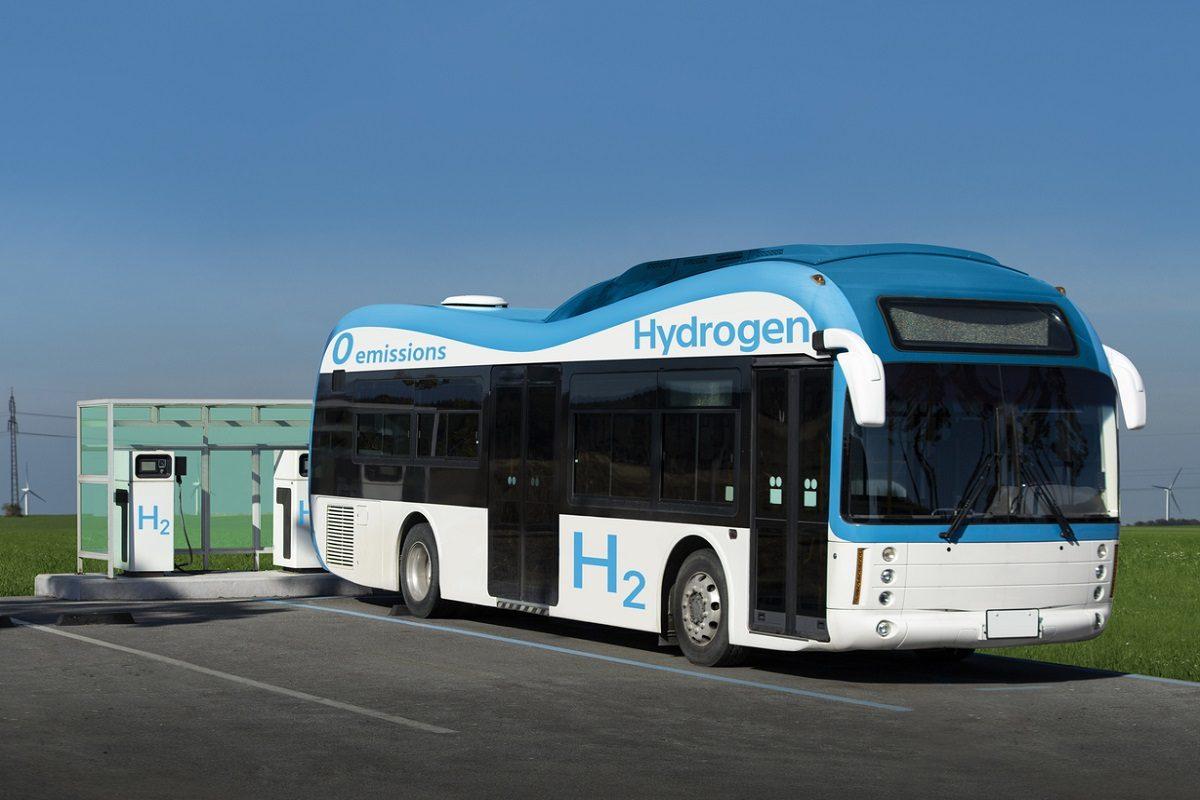
Na tabela abaixo, demos uma ideia das principais diferenças que você notaria entre esses dois ônibus.
| Ônibus elétricos | Ônibus movidos a célula de combustível de hidrogênio |
| Maior eficiência | A eficiência é menor do que a dos autocarros elétricos |
| A ausência de uso causa emissão zero | Causa emissões quando não está em uso |
| O armazenamento de energia é baixo | O armazenamento de energia é alto |
| O custo total de propriedade é menor | O custo total de propriedade é alto |
| Longo tempo de carregamento | Menor tempo de reabastecimento |
| Têm um alcance limitado e não são adequados para distâncias maiores | Têm um alcance maior e são adequados para longas distâncias |
Vamos mergulhar em uma análise comparativa detalhada entre ônibus elétricos a bateria e ônibus movidos a combustível.
1. Eficiência energética
O ônibus elétrico a bateria é muito mais eficiente em termos de energia do que o ônibus movido a célula de combustível de hidrogênio. A principal razão para isso é a sua fonte de energia. Os ônibus elétricos a bateria funcionam com uma única fonte de energia, a eletricidade, enquanto o ônibus movido a célula de combustível depende de duas fontes de energia para produzir eletricidade: oxigênio e hidrogênio.
Os ônibus elétricos a bateria têm uma eficiência geral de cerca de 85 a 90% , enquanto os ônibus movidos a hidrogênio têm uma eficiência de apenas cerca de 60 a 70%.
Veja também: O que é a ansiedade de autonomia dos veículos elétricos? Ela existe mesmo? Como superá-la?
2. Emissões de dióxido de carbono
Ao comparar o ônibus elétrico com o ônibus a hidrogênio, o ônibus elétrico a bateria também se mostra mais eficiente em termos de emissões do que o ônibus movido a célula de combustível de hidrogênio. Ambos os tipos de ônibus produzem emissões durante a operação.
No entanto, não há emissão de gases quando um ônibus elétrico a bateria não está em funcionamento, enquanto o ônibus movido a célula de combustível de hidrogênio, mesmo quando não está em uso, emite gases. Isso gera uma necessidade constante de reabastecimento de hidrogênio.
3. Armazenamento de Energia
Ao comparar ônibus a hidrogênio com ônibus elétricos em termos de conversão de energia armazenada em energia utilizável, os ônibus movidos a hidrogênio se mostram mais eficientes . Isso significa que a maior parte da energia armazenada no ônibus com célula de combustível pode ser utilizada para alimentar o veículo.
Por outro lado, os ônibus elétricos perdem a energia armazenada durante o processo de conversão na forma de calor. Os ônibus movidos a células de combustível de hidrogênio também são eficientes e superiores aos ônibus elétricos a bateria quando se trata de reservar recursos adicionais de energia renovável.
4. Custo total de propriedade
O custo total de propriedade (TCO) dos ônibus movidos a células de combustível é quase o dobro do dos ônibus elétricos a bateria . O alto preço do hidrogênio verde representa um grande desafio para a implantação em larga escala de ônibus movidos a células de combustível.
No entanto, a equivalência de custos será possivelmente alcançada entre 2025 e 2030 devido aos avanços na fabricação de componentes FCEB.
5. Autonomia e tempo de reabastecimento
Em comparação com os ônibus elétricos, os ônibus a hidrogênio são mais vantajosos e eficientes em termos de tempo de reabastecimento e autonomia.
Os ônibus elétricos a hidrogênio podem percorrer 500 km e levam cerca de 7 a 8 minutos para reabastecer, enquanto os ônibus elétricos podem percorrer 350 km e recarregar em cerca de 30 a 40 minutos.
Eles também têm um alcance maior e um tempo de viagem maior do que os ônibus elétricos. Isso torna os ônibus movidos a hidrogênio mais adequados para percursos mais longos.
Leia também: Os carros elétricos perdem autonomia com o tempo?
Ônibus elétricos vs. ônibus a diesel

Depois de explorar os ônibus elétricos e os ônibus movidos a hidrogênio, vamos comparar os ônibus elétricos e os ônibus a diesel e descobrir por que os ônibus elétricos são melhores que os ônibus a diesel por meio de uma análise comparativa.
| Ônibus elétrico | Ônibus Diesel |
| Alimentado por eletricidade | Alimentado por diesel |
| Emissão baixa | Maior emissão |
| Reduzir a poluição sonora | Causa poluição sonora |
| Alto custo inicial | Menor custo inicial |
| Baixo custo de manutenção | Alto custo de manutenção |
| Requer uma infraestrutura de carregamento dedicada | Nenhuma infraestrutura separada necessária |
Vamos discutir as diferenças com mais detalhes.
1. Energia renovável
Ônibus elétricos movidos a baterias são renováveis por natureza. Isso os torna o modo de transporte mais preferível e sustentável do que os ônibus a diesel tradicionais.
2. Menores emissões
Os ônibus a diesel geralmente produzem emissões mais elevadas, o que torna os ônibus elétricos uma inovação revolucionária e a opção preferida, já que não emitem poluentes. Isso permite que os passageiros tenham uma experiência de viagem livre de poluição.
3. Poluição sonora
Ao viajar, um dos problemas comumente vistos que as pessoas enfrentam é o ruído desconfortável vindo dos motores a diesel dos veículos. É aqui que os ônibus elétricos entram em cena. Sendo elétricos, eles produzem ruído muito baixo, o que dá aos passageiros uma experiência silenciosa e confortável.
4. Custos de Manutenção
Em comparação com os ônibus a diesel, os elétricos exigem pouca manutenção. Os ônibus elétricos têm menos componentes móveis do que os ônibus a diesel, o que resulta em custos mais baixos e previsíveis.
5. Problemas de saúde
Por um lado, os ônibus elétricos diminuem a possibilidade de as crianças serem afetadas por emissões nocivas . Por outro lado, os ônibus a diesel causam emissões que podem resultar em problemas de saúde, principalmente para crianças vulneráveis e idosos.
Veja também: Carros a gasolina vs. carros elétricos: prós e contras
Desvantagens dos ônibus elétricos em relação aos ônibus a diesel
As desvantagens de usar ônibus elétricos em vez de ônibus a diesel são:
1. Custo de compra
Em termos de preço, os ônibus tradicionais movidos a diesel são mais acessíveis do que os elétricos. Embora os ônibus elétricos sejam economicamente vantajosos a longo prazo, exigem um alto investimento inicial.
2. Infraestrutura de carregamento
Como os ônibus elétricos são movidos por baterias, eles precisam de uma infraestrutura de carregamento para carregar suas baterias para eletricidade. A despesa de configuração para uma estação de carga bem equipada é bastante alta e garantir a manutenção adequada é um fardo adicional para os operadores. Por outro lado, os ônibus tradicionais não exigem nenhuma configuração, pois funcionam com motores a diesel.
Embora existam vantagens e desvantagens consideráveis para ambos os modos. Mas com os crescentes desafios do clima e a poluição crescente, optar por ônibus elétricos em vez de ônibus a diesel é uma decisão sábia.
Confira também os 10 motivos pelos quais os carros a gasolina são melhores que os elétricos.
Custo do ônibus elétrico

O crescimento e a popularidade dos ônibus elétricos na Índia aumentaram a demanda, o que levou diversas empresas a entrarem no mercado. Para atender às necessidades da população crescente, alguns dos grandes fabricantes, incluindo empresas indianas como Tata, JBM Motors, PMI, Ashok Leyland e Olectra Greentech, e fabricantes internacionais como BYD e Proterra, estão investindo em ônibus elétricos para o transporte público. Agora, vamos conhecer o custo dos ônibus elétricos na Índia e nos EUA.
Custo do ônibus elétrico na Índia
Abaixo mencionamos alguns fabricantes indianos de ônibus elétricos bem conhecidos e seus custos.
1. O ônibus elétrico Tata Starbus EV 4 12 Low Entry está disponível a partir de 2.20 crores de rúpias.
2. A Olectra K9 está disponível a partir de 2 crores de rúpias.
3. Ônibus elétrico JBM Ecolife , disponível por 2 crores de rúpias.
4. O ônibus elétrico urbano da PMI está disponível a partir de 1.25 crore de rúpias.
Custo de propriedade na Índia
De acordo com o relatório de análise do Custo Total de Propriedade (TCO) de ônibus elétricos na Índia, elaborado pelo World Resources Institute, o TCO para ônibus elétricos é muito menor do que o de ônibus convencionais.
O Custo Total de Propriedade (TCO) de qualquer veículo leva em consideração os custos operacionais e de capital ao longo do período de serviço. O relatório analisa comparativamente duas variantes de ônibus elétricos, uma com bateria pequena de 125 kWh e outra com bateria grande de 320 kWh, além de ônibus a diesel de 9 e 12 metros de altura e modelos básicos.
Para um ônibus de 12 metros, o Custo Total de Propriedade é de aproximadamente 53.77/km para um ônibus elétrico com bateria de 125 kWh , valor inferior ao das duas variantes de ônibus a diesel.
Por outro lado, o TCO para a variante de bateria de 320 kWh é de 77.75/km, o que é um pouco semelhante a uma variante de ônibus a diesel de alto custo. Um ônibus de 9 metros com uma bateria maior é um pouco mais alto do que um ônibus a diesel. Enquanto um ônibus elétrico com uma bateria menor tem o menor TCO por km entre todas as opções.
Recentemente, em janeiro de 2023, os preços encontrados para 6,465 licitações de ônibus elétricos na Índia são 29% menores que o custo operacional de ônibus a diesel. Esta licitação foi realizada pela primeira vez no âmbito do Programa Nacional de Ônibus Elétricos (NEBP). Os dados foram fornecidos pela empresa estatal Convergence Energy Services Ltd.
Para um ônibus de 12 metros, o menor preço encontrado foi em torno de 54.3/km (intra-cidade) e 39.8/km (intermunicipal). O preço para um ônibus de 9 metros foi de 54.46/km e 61.92/km para um ônibus de 7 metros.
Leia também: Alimentando o debate: Scooter elétrica versus scooter a gasolina
Preços de ônibus elétricos nos EUA

Após analisar os preços de ônibus elétricos na Índia, aqui está uma lista de alguns ônibus elétricos lançados recentemente e seus preços no mercado americano para lhe dar uma ideia geral. No entanto, os preços dos ônibus elétricos nos EUA podem variar de acordo com os recursos solicitados.
1. Ônibus Proterra Catalyst de 40 pés : aproximadamente US$ 550000.
2. ÔNIBUS ELÉTRICO Midi BYD 8m: US$ 84553 aproximadamente.
3. Ônibus elétrico BYD C10MS : quase US$ 120000.
4. Solaris Urbino 12 Elétrico: US$ 167900 aproximadamente.
5. Olectra C9 : aproximadamente US$ 302606.
6. Olectra Ebus K9: quase US$ 145142.
7. Ashok Leyland Oyster : $ 330200.
8. Ônibus elétrico Ankai 8.5M, longo alcance: US$ 350000.
9. Ônibus urbano elétrico King Long 9m : $ 477210.
10. Yutong E9: $ 357589
Preço do ônibus escolar elétrico nos EUA
Nos Estados Unidos, os ônibus escolares elétricos a bateria do tipo A custam cerca de US$ 250,000, enquanto os ônibus a diesel custam aproximadamente entre US$ 50,000 e US$ 65,000.
O custo dos ônibus elétricos Tipo C ou Tipo D varia de US$ 320,000 a US$ 440,000.
Além disso, confira nosso blog: Quais fatores afetam o custo da substituição da bateria de um carro elétrico?
À luz da discussão acima, a transição do segmento de ônibus para a eletrificação parece essencial para uma mudança produtiva rumo a um ecossistema ecologicamente correto e eficiente. Os ônibus elétricos provaram ser um investimento valioso, principalmente para operadores de ônibus escolares e sistemas de transporte urbano. Embora o alto custo inicial tenha retardado a adoção de ônibus elétricos, a implantação consistente desses veículos e os avanços tecnológicos sugerem que eles se tornarão mais econômicos com o tempo.


